
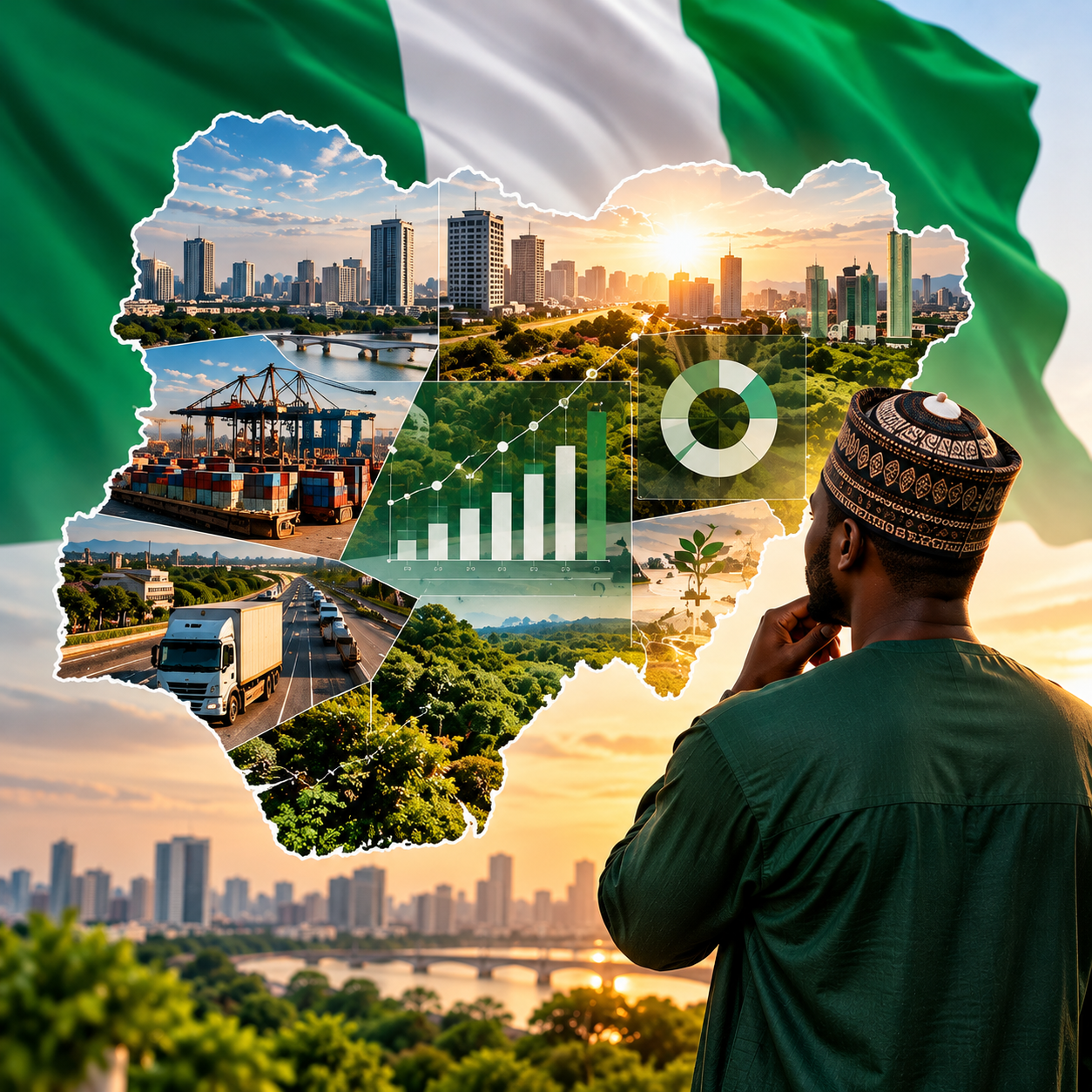
Ask how much carbon a truck on the Lagos to Kano road produces and the honest answer is that nobody really knows, because almost any figure you are given will have been worked out with default emission factors developed in Europe for European vehicles running on European roads.
Those defaults are a reasonable place to start, and the international standard for freight emissions, ISO 14083, along with the GLEC Framework that puts it into practice, allows them where real data is missing. The trouble is how far they sit from conditions here. A twenty-year-old truck carrying a heavy load through potholes, idling for days at a port gate and then coming home empty does not behave like a modern lorry on a European motorway, so our trucks probably emit more per tonne than the tables suggest, while the operators who have done the hard work of running cleaner get no credit for it at all.
Why this matters now
Measurement used to be a question for researchers, but it has become a commercial one. Large buyers reporting on their supply chains are asking transport suppliers for figures that meet ISO 14083, and since January 2026 anyone exporting goods such as fertiliser, aluminium or cement into the European Union has had to account for their embedded emissions under the Carbon Border Adjustment Mechanism. Green loans and climate finance increasingly depend on verified results as well.
If Nigeria can't produce its own numbers, others will produce them for us, and they will use assumptions that rarely work in our favour. A haulier who has cut fuel use by a fifth has no way to prove it, an exporter can't show that its goods travelled efficiently, and government ends up making transport policy without knowing where emissions actually come from.
What owning our data would look like
None of this needs exotic technology. It starts with operators recording what they already know, which is the fuel they buy, the kilometres they drive, the loads they carry and how often their trucks run empty, and much of that can be captured automatically through telematics and digital freight platforms. Collected properly and checked independently, that information can produce emission factors that reflect Nigerian roads and Nigerian vehicles.
Government has a part to play in setting one common method and making sure the figures are verified, so that a tonne-kilometre reported in Kano means the same thing as one reported in Port Harcourt. Operators have every reason to start early, because when a client or a lender asks for evidence, they will be the ones able to answer.
Independence in our own numbers
Self-rule in 1960 meant writing our own laws, and in 2026 it also means being able to describe our own economy in our own numbers instead of borrowing someone else's. Freight emissions are a small part of that picture, but they sit right where trade, finance and climate policy are starting to meet.
At Sidante Maliz, measurement and reporting are at the centre of our work, and we help operators and public bodies collect, check and report freight data that stands up to scrutiny.
Happy Independence Day, Nigeria.