
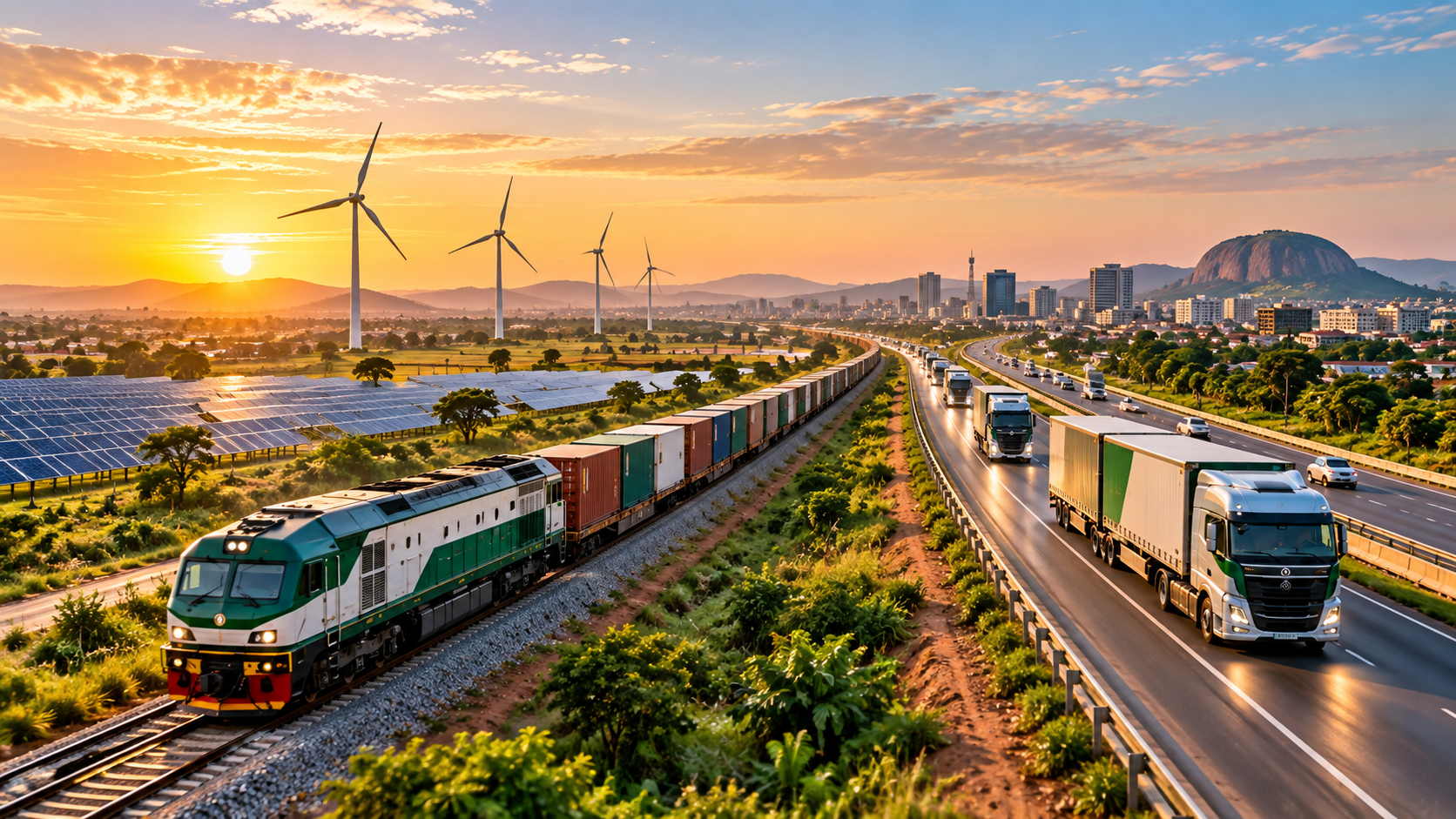
In 1960, if you were sending groundnuts from Kano to Lagos for export, the chances are they would have gone by train, because rail carried most of the country's freight in the years around independence. Today it carries less than 5% while more than 90% of our goods move by road, and the famous groundnut pyramids of Kano have gone along with most of the railway traffic that once served them.
Roads won partly because they were flexible and partly because the railways were left to decline for decades, and we pay for that shift every day, in highways worn down by heavy trucks and in fuel bills that end up in the price of everything sold in the market.
Rail is coming back
The past decade has brought real progress, with the Abuja to Kaduna standard gauge line opening in 2016, Lagos to Ibadan following in 2021, and Lagos now running its first metro lines. Most of these are passenger services so far, but they prove that new rail can be built and run in Nigeria, and freight is where the bigger prize lies, since a single train can carry the load of dozens of trucks using far less fuel per tonne while taking heavy traffic off the highways.
Over the next 66 years, freight rail should link our seaports and inland dry ports with the industrial zones that depend on them, leaving trucks to do what they do best, which is the first and last stretch of each journey.
Cleaner power on the roads
Roads will still carry a great deal of our freight, so what powers them matters. Many operators are now switching to CNG, which is cheaper than diesel and burns cleaner, and that is a sensible move for today, while over the longer horizon the goal should be vehicles that produce no emissions at all.
For short trips in our cities that future is already arriving, with electric motorcycles and tricycles on Lagos streets and battery-swap networks spreading, and when they are charged from solar, the energy that runs them costs nothing once the panels are paid for. For heavy, long-distance haulage, green hydrogen is a strong candidate, and although it is still costly and at an early stage in Nigeria, our solar resource and long experience in the gas industry give us a head start if we choose to build on them.
Planning for our grandchildren
Infrastructure outlasts the people who build it, and the railway lines laid before independence were still carrying trains generations later. The roads, rail links and energy systems Nigeria builds over the next ten years will shape how goods move in 2092, when the country marks 132 years of independence, which is a strong argument for putting freight rail into national transport plans now, building clean charging and refuelling along our major corridors, and rewarding the operators who cut emissions instead of leaving them to carry the cost alone.
At Sidante Maliz, we can help plan freight transport for the long term.
Happy Independence Day, Nigeria.