
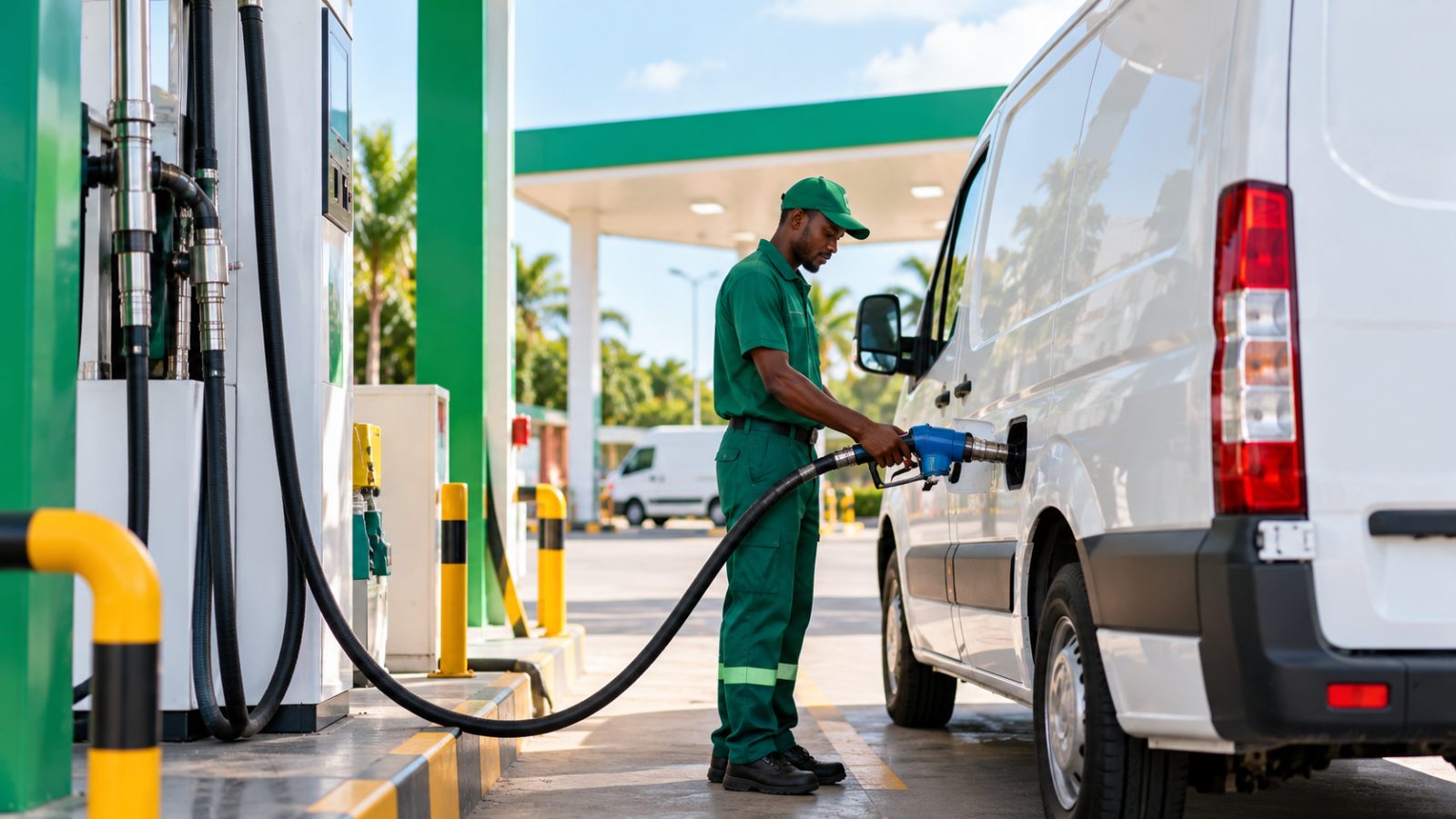
Fuel is the first thing most people think about when they talk about cleaner deliveries, and in Nigeria the conversation has become livelier since the Presidential CNG Initiative started encouraging operators to convert vehicles to compressed natural gas. So how do the three main fuels on Nigerian roads actually compare when it comes to emissions per delivery?
The tailpipe numbers
Burning a litre of diesel releases about 2.68 kg of carbon dioxide, and a litre of petrol about 2.3 kg. Diesel contains more energy per litre, though, and diesel engines are more efficient, so a diesel van usually travels further on each litre than a similar petrol one. Per kilometre the two are often closer than the per-litre figures suggest.
Natural gas has a lower carbon content than either liquid fuel for the energy it delivers. Studies of vehicles converted from petrol commonly find tailpipe carbon dioxide falls by somewhere around a fifth, and CNG engines also produce far less soot and fine particles, which is a real benefit for air quality in crowded cities and for the health of drivers and residents.
The full picture
Tailpipe figures are only part of the story. Methods such as ISO 14083 count well-to-wheel emissions, which include producing and delivering the fuel. For natural gas, any methane that leaks along the supply chain matters a great deal, since methane is a much more powerful greenhouse gas than carbon dioxide over the short term. Well-managed gas systems keep this low, and the size of the benefit from CNG depends partly on how well that is done.
Engine condition and tuning also matter. A poorly converted or badly maintained vehicle will not deliver the savings that a well-set-up one does, whatever the fuel.
Why load and route can matter more
When you divide emissions by the number of deliveries, fuel type is only one lever. A diesel truck that travels full on the outward and return journey can produce lower emissions per parcel than a CNG van that travels half-empty and comes back with nothing. Route planning, avoiding long idling in traffic, consolidating small orders and filling return trips often bring bigger reductions than switching fuel, and they save money at the same time.
Where this leaves operators
CNG is already in use across Nigeria, it is cheaper to run than petrol at current prices, and it is cleaner at the tailpipe. For many operators it is a sensible step today. Looking further ahead, electric vehicles for short urban rounds and hydrogen for heavier work are where much of the world is heading, and Nigerian operators will want to keep an eye on how quickly those options become practical and affordable here.
Whichever fuel you use, the most valuable thing you can do is measure. Record fuel by vehicle, note the distance and load for each trip, and work out emissions per delivery. Once you have those numbers you can see which changes really make a difference for your business rather than relying on general claims.